

Overview
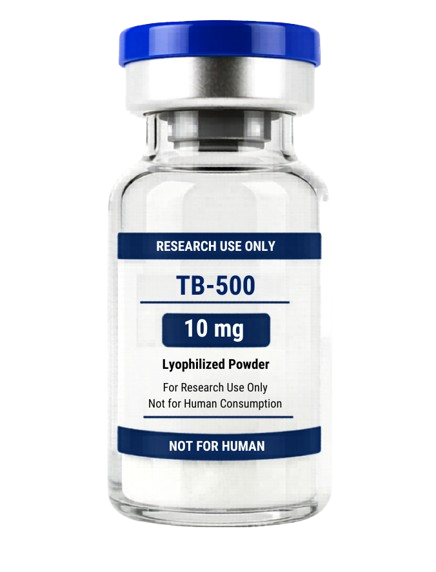
Torsena is a European supplier of research-grade TB-500 dedicated to qualified laboratories and research institutions. Orders ship from EU-based stock with batch documentation available upon request. Single vials and bulk quantities are available for ongoing study protocols.
Lot & Supply Format
- Purity ≥99% verified by HPLC/MS analysis
- Mannitol-free formulation (no bulking agents or buffers)
- Lyophilized peptide in sealed glass research vials
- Single vials and bulk quantities available
- CoA transparency: batch-specific certificate of analysis available upon request
- Shipped from Europe with temperature-appropriate packaging
What is TB-500 (Thymosin Beta-4)?
TB-500 is a synthetic version of thymosin beta-4 (Tβ4). The natural peptide is a 43-amino acid molecule present in virtually all mammalian cell types. Thymosin beta-4 is the most abundant member of the beta-thymosin family. It serves as the primary intracellular G-actin sequestering peptide and plays a central role in actin cytoskeleton dynamics.
In research contexts, TB-500 is studied for its role in cellular migration, cytoskeletal reorganization, and tissue repair signaling pathways. The compound’s ubiquitous expression across tissue types and its involvement in fundamental cellular processes have made it one of the most broadly investigated peptides in regenerative research.
Supplied exclusively for in-vitro and ex-vivo research by qualified laboratories. Not intended for human or animal administration.
Mechanistic Overview
Actin Dynamics
Thymosin beta-4 binds monomeric G-actin with a 1:1 stoichiometry. This sequesters G-actin from polymerization into F-actin filaments. The actin-sequestering function regulates cytoskeletal dynamics in experimental models studying cell migration, morphological changes, and intracellular structural reorganization.
Cell Migration Signaling
Research models have identified TB-500 as a potent modulator of cell migration pathways. The active domain responsible for this activity has been localized to the central actin-binding region of the peptide. The specific sequence is LKKTET, spanning amino acids 17-22. This motif has been characterized in migration assays across multiple cell lineages.
Vascular Research
Preclinical studies have examined thymosin beta-4 in models of vascular formation and endothelial cell signaling. Published research describes its involvement in tube formation assays and endothelial cell migration models. These studies position the peptide as a research tool in angiogenesis pathway investigation.
Inflammatory Pathway Modulation
TB-500 has been studied in experimental inflammation models. Research has examined its interaction with cytokine signaling cascades and inflammatory mediator pathways. These studies have characterized the compound’s effects on inflammatory marker expression under controlled experimental conditions.
TB-500 vs BPC-157
| Characteristic | TB-500 | BPC-157 |
|---|---|---|
| Length | 43 amino acids | 15 amino acids |
| Origin | Thymus-derived, ubiquitous expression | Gastric juice protein fragment |
| Primary Mechanism | Actin sequestration, cell migration | Cytoprotection, NO system modulation |
| Research Focus | Cytoskeletal dynamics, migration assays | Tissue repair, GI cytoprotection |
| Active Motif | LKKTET (aa 17-22) | Full 15-mer required |
| CAS Number | 77591-33-4 | 137525-51-0 |
For paired regenerative research, see also our BPC-157 research peptide.
Reconstitution & Storage
Lyophilized TB-500 is stable at -20°C for long-term storage. Reconstitution for in-vitro work is typically performed using bacteriostatic water or sterile saline. Reconstituted aliquots are generally stored at 2-8°C for short-term use. For extended storage, aliquot and freeze at -20°C to preserve peptide integrity. As a 43-residue peptide, TB-500 is more sensitive to freeze-thaw cycles than smaller peptides — minimize repeated cycles to preserve activity. Researchers should follow institutional SOPs for handling lyophilized peptides.
Why Torsena
- Analytical Testing — Purity verified by third-party HPLC and mass spectrometry
- No Fillers — Mannitol-free, no bulking agents or buffer salts
- Batch Transparency — Certificate of Analysis available upon request
- Consistent Availability — Single vials and bulk quantities maintained in stock
- EU Distribution — Shipped from European fulfillment with tracked courier
- Full Documentation — Batch-specific CoA and MSDS available for institutional procurement
Product Specifications
Chemical Name: TB-500 (Thymosin Beta-4)
Synonyms: Tβ4, Thymosin β4
CAS Number: 77591-33-4
Molecular Formula: C₂₁₂H₃₅₀N₅₆O₇₈S
Molecular Weight: 4963.44 g/mol
Purity: ≥99% (HPLC/MS)
Physical Form: White lyophilized powder
Additives: None (mannitol-free)
Intended Use: In-vitro / ex-vivo laboratory research only
Amino Acid Sequence
Ac-Ser-Asp-Lys-Pro-Asp-Met-Ala-Glu-Ile-Glu-Lys-Phe-Asp-Lys-Ser-Lys-Leu-Lys-Lys-Thr-Glu-Thr-Gln-Glu-Lys-Asn-Pro-Leu-Pro-Ser-Lys-Glu-Thr-Ile-Glu-Gln-Glu-Lys-Gln-Ala-Gly-Glu-Ser
Peptide Length: 43 amino acids
Type: Linear, N-terminal acetylated
Active Motif: LKKTET (positions 17-22)
Analytical Transparency
All Torsena research materials are tested for purity and identity by HPLC and mass spectrometry analysis. Batch-specific Certificates of Analysis are available upon request for institutional procurement.
- Reverse-phase HPLC purity determination
- Mass spectrometry identity confirmation
- Appearance and solubility verification
- Endotoxin screening (where applicable)
Related Research Compounds
Researchers studying regenerative signaling, tissue repair, and cytoskeletal dynamics may also be interested in:
- BPC-157 — gastric pentadecapeptide for cytoprotection and NO system research
- GHK-Cu — copper tripeptide for ECM remodeling and gene expression research
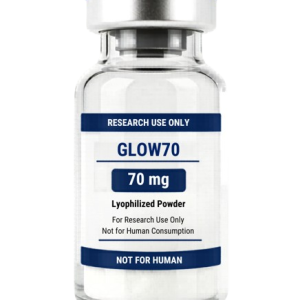
- Glow70 — three-component blend including TB-500, BPC-157, and GHK-Cu
- Klow80 — four-component blend including TB-500, BPC-157, GHK-Cu, and KPV
- Glow50 — two-component blend including TB-500
Reviews
There are no reviews yet.