

Overview
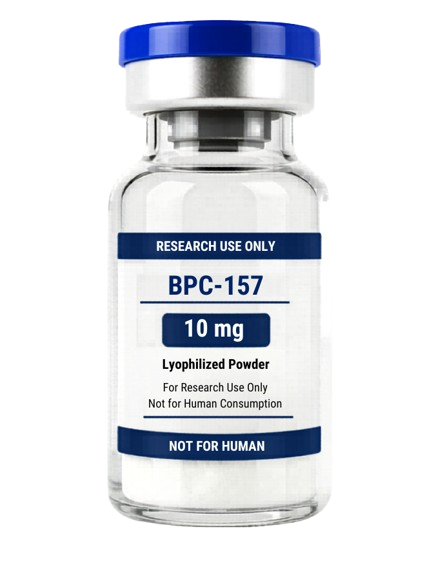
Torsena is a European supplier of research-grade BPC-157 dedicated to qualified laboratories and research institutions. Orders ship from EU-based stock with batch documentation available upon request. Single vials and bulk quantities are available for ongoing study protocols.
Lot & Supply Format
- Purity ≥99% verified by HPLC/MS analysis
- Mannitol-free formulation (no bulking agents or buffers)
- Lyophilized peptide in sealed glass research vials
- Single vials and bulk quantities available
- CoA transparency: batch-specific certificate of analysis available upon request
- Shipped from Europe with temperature-appropriate packaging
What is BPC-157?
BPC-157 (Body Protection Compound-157) is a synthetic pentadecapeptide consisting of 15 amino acids. It is derived from a partial sequence of human gastric juice protein. BPC-157 is one of the most extensively studied peptides in regenerative and cytoprotective research. It has a substantial body of preclinical literature spanning over two decades.
Unlike most bioactive peptides, BPC-157 demonstrates notable stability in acidic and enzymatic environments. This property has made it a subject of interest in gastrointestinal research models. The compound has been investigated in a broad range of experimental contexts. These include tissue repair signaling, vascular formation pathways, and cytoprotective mechanisms in organ injury models.
BPC-157 is not derived from any approved pharmaceutical product. It has no approved therapeutic application. The compound remains a research-only material studied exclusively in preclinical experimental settings.
Supplied exclusively for in-vitro and ex-vivo research by qualified laboratories. Not intended for human or animal administration.
Mechanistic Overview
Cytoprotective Pathways
BPC-157 has been studied in experimental models for its effects on cellular protection signaling. The primary tissue contexts are gastrointestinal, hepatic, and musculoskeletal models. Published research describes interactions with nitric oxide (NO) system modulation. This includes both constitutive and inducible NO synthase pathways.
Angiogenic Signaling
Preclinical literature describes BPC-157 activity in models examining vascular formation and VEGF-related signaling. In experimental tissue injury models, the compound has been investigated for its association with accelerated vascular network formation under controlled conditions.
Growth Factor Pathway Modulation
Research models have examined BPC-157 in the context of growth factor receptor signaling. The pathways studied include FAK-paxillin and JAK-2. These studies have characterized the compound’s interactions with intracellular signaling cascades associated with tissue repair and cellular migration processes.
Stability Profile
BPC-157 has demonstrated stability in gastric juice and acidic pH environments in experimental testing. This property is uncommon among bioactive peptides of comparable size. The characteristic has been investigated in gastrointestinal research models examining mucosal integrity and epithelial signaling.
Reconstitution & Storage
Lyophilized BPC-157 is stable at -20°C for long-term storage. Reconstitution for in-vitro work is typically performed using bacteriostatic water or sterile saline. Reconstituted aliquots are generally stored at 2-8°C for short-term use. For extended storage, aliquot and freeze at -20°C to preserve peptide integrity. The compound’s known acid-stability does not extend indefinitely to all reconstituted conditions, so standard peptide handling protocols still apply. Researchers should follow institutional SOPs for handling lyophilized peptides.
Why Torsena
- Analytical Testing — Purity verified by third-party HPLC and mass spectrometry
- No Fillers — Mannitol-free, no bulking agents or buffer salts
- Batch Transparency — Certificate of Analysis available upon request
- Consistent Availability — Single vials and bulk quantities maintained in stock
- EU Distribution — Shipped from European fulfillment with tracked courier
- Full Documentation — Batch-specific CoA and MSDS available for institutional procurement
Product Specifications
Chemical Name: BPC-157 (Pentadecapeptide BPC 157)
Synonyms: Body Protection Compound-157, PL 14736, PL-10, Bepecin
CAS Number: 137525-51-0
Molecular Formula: C₆₂H₉₈N₁₆O₂₂
Molecular Weight: 1419.53 g/mol
Purity: ≥99% (HPLC/MS)
Physical Form: White lyophilized powder
Additives: None (mannitol-free)
Intended Use: In-vitro / ex-vivo laboratory research only
Amino Acid Sequence
Gly-Glu-Pro-Pro-Pro-Gly-Lys-Pro-Ala-Asp-Asp-Ala-Gly-Leu-Val
Peptide Length: 15 amino acids
Type: Linear, unmodified
Origin: Partial sequence of human gastric juice protein BPC
Analytical Transparency
All Torsena research materials are tested for purity and identity by HPLC and mass spectrometry analysis. Batch-specific Certificates of Analysis are available upon request for institutional procurement.
- Reverse-phase HPLC purity determination
- Mass spectrometry identity confirmation
- Appearance and solubility verification
- Endotoxin screening (where applicable)
Related Research Compounds
Researchers studying regenerative signaling, tissue repair, and cytoprotective pathways may also be interested in:
- TB-500 — synthetic thymosin beta-4 for actin dynamics and cell migration research
- GHK-Cu — copper tripeptide for ECM remodeling and gene expression research
- Glow70 — three-component blend including BPC-157, GHK-Cu, and TB-500
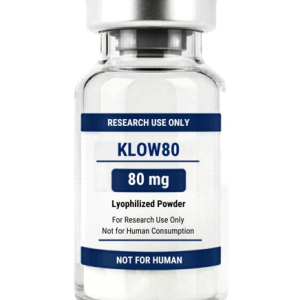
- Klow80 — four-component blend including BPC-157, GHK-Cu, KPV, and TB-500
- Glow50 — two-component blend including BPC-157
Reviews
There are no reviews yet.