


Overview
Torsena supplies retatrutide research peptide to laboratories across the European Union, dispatched from France with tracked delivery. Vials run from 5mg to 30mg. Sizes shown as backorder ship as soon as their batch testing is complete.
Lot & Supply Format
- Purity. ≥99% by HPLC, with a batch certificate of analysis on request.
- Formulation. Mannitol-free, with no bulking agents or buffer salts.
- Presentation. Lyophilized powder in sealed glass research vials.
- Quantities. Single vials as standard, small bulk orders quoted on request.
- Shipping. Dispatched from France with tracked delivery.
What is Retatrutide (LY3437943)?
Retatrutide is a synthetic 39-amino-acid peptide developed by Eli Lilly. It was the first single molecule designed to activate three metabolic receptors: GIP, GLP-1 and glucagon. Its backbone is built on a GIP receptor agonist scaffold, and a fatty diacid side chain lets it bind albumin, which extends its persistence in experimental models.
GLP-1 receptor. Studied in incretin signaling, glucose-dependent insulin release, gastric emptying and central appetite pathways.
GIP receptor. Studied for its role in insulin sensitivity and lipid handling, and for its synergy with GLP-1 signaling.
Glucagon receptor. Studied in energy expenditure, hepatic glycogenolysis and lipid oxidation. This is the axis that separates retatrutide from tirzepatide, which acts at GIP and GLP-1 only, and from semaglutide, which acts at GLP-1 only.
A mixture of three separate agonists cannot reproduce this profile, because separate molecules never hold the fixed ratio of receptor engagement built into a single scaffold.
Supplied exclusively for in-vitro and ex-vivo research by qualified laboratories. Not intended for human or animal administration.
Receptor Binding Profile
Potency values below come from cAMP accumulation assays in HEK293 cells expressing each receptor.
| Receptor | Human EC50 | Mouse EC50 |
|---|---|---|
| GIP receptor (GIPR) | 0.0643 nM | 0.191 nM |
| GLP-1 receptor (GLP-1R) | 0.775 nM | 0.794 nM |
| Glucagon receptor (GCGR) | 5.79 nM | 2.32 nM |
Potency at the human GIP receptor is roughly 90 times higher than at the glucagon receptor. The spread is a design choice, and it matters most when you set working concentrations.
Research Applications
- Obesity and energy homeostasis. Body weight regulation, food intake, and fat versus lean mass partitioning in diet-induced obesity models.
- Glycemic control. Glucose tolerance, insulin sensitivity and type 2 diabetes models.
- Hepatic lipid metabolism. MASLD and NASH models, with a focus on hepatic fat oxidation.
- Adipose tissue remodeling. Tissue-level metabolic and inflammatory response.
- Gastric emptying. Motility studies in rodent models.
- Cardiometabolic research. Models combining metabolic and cardiac readouts.
Published Research Data
Retatrutide has been characterised from discovery through Phase 2, and Eli Lilly reported Phase 3 topline results from its TRIUMPH program in 2026. Protocols vary widely between studies, so check the primary sources before designing your own work.
Key references:
Coskun T, et al. LY3437943, a novel triple glucagon, GIP, and GLP-1 receptor agonist for glycemic control and weight loss: from discovery to clinical proof of concept. Cell Metab. 2022;34(9):1234-1247.
Jastreboff AM, et al. Triple-hormone-receptor agonist retatrutide for obesity. N Engl J Med. 2023;389(6):514-526.
Rosenstock J, et al. Retatrutide, a GIP, GLP-1 and glucagon receptor agonist, for people with type 2 diabetes. Lancet. 2023;402(10401):529-544.
Urva S, et al. The novel GIP, GLP-1 and glucagon receptor agonist retatrutide delays gastric emptying. Diabetes Obes Metab. 2023;25(9):2784-2788.
Retatrutide vs Tirzepatide vs Semaglutide
| Characteristic | Retatrutide | Tirzepatide | Semaglutide |
|---|---|---|---|
| Receptor targets | Triple: GIP, GLP-1, glucagon | Dual: GIP, GLP-1 | Single: GLP-1 |
| Peptide backbone | GIP-based | GIP-based | GLP-1-based |
| Molecular length | 39 amino acids | 39 amino acids | 31 amino acids |
| Molecular weight | 4731.33 Da | 4813.53 Da | 4113.58 Da |
| Lipidation | Fatty diacid | C20 fatty diacid | C18 fatty diacid |
| Key distinction | Glucagon axis activity | Dual incretin synergy | Single well-mapped pathway |
| CAS number | 2381089-83-2 | 2023788-19-2 | 910463-68-2 |
Retatrutide research peptide specifications
| Chemical name | Retatrutide |
| Synonyms | LY3437943, LY-3437943 |
| CAS number | 2381089-83-2 |
| Molecular formula | C221H342N46O68 |
| Molecular weight | 4731.33 g/mol |
| Exact mass | 4728.47 |
| Peptide length | 39 amino acids |
| Backbone | GIP receptor agonist scaffold |
| Modification | Fatty diacid, albumin-binding |
| Purity | ≥99% (HPLC), identity by MS |
| Physical form | White to off-white lyophilized powder |
| Additives | None, mannitol-free |
| Vial sizes | 5mg, 10mg, 15mg, 20mg, 30mg |
| Storage | -20°C, sealed, protected from light |
| Intended use | In-vitro / ex-vivo laboratory research only |
Molecular weight shifts slightly between batches with hydration, so use the figure on your batch CoA when calculating solvent volumes.
Solubility & Handling
- DMSO. Sparingly soluble, roughly 1-10 mg/mL.
- PBS, pH 7.2. Sparingly soluble, roughly 1-10 mg/mL.
- Water. Slightly soluble.
- Acetonitrile. Slightly soluble.
Store lyophilized material at -20°C, sealed and away from light. Let vials reach room temperature before opening, otherwise condensation draws moisture into the powder.
Analytical Documentation
Each batch is third-party tested by reverse-phase HPLC for purity and mass spectrometry for identity. The batch certificate of analysis is available on request.
Why Torsena for Retatrutide Research Peptide
- Documentation. Batch CoAs covering HPLC purity and MS identity.
- No fillers. Mannitol-free material.
- Consistent release criteria. Every batch is tested against the same purity and identity specifications before it ships.
- Technical enquiries. Questions on specifications, CoAs and bulk quotes are answered within one business day.
Frequently Asked Questions
What is the molecular weight of retatrutide?
4731.33 g/mol, with the molecular formula C221H342N46O68. Batch values vary slightly with hydration, so use the figure on your CoA for concentration calculations.
How does retatrutide differ from tirzepatide?
Both are 39-amino-acid peptides on a GIP backbone. Retatrutide adds glucagon receptor activity, which preclinical work links to higher energy expenditure and hepatic fat oxidation.
What is retatrutide’s potency at each receptor?
Reported human EC50 values are 0.0643 nM at the GIP receptor, 0.775 nM at GLP-1 and 5.79 nM at glucagon, measured by cAMP accumulation in HEK293 cells.
How should retatrutide be stored?
At -20°C, sealed and protected from light. Bring vials to room temperature before opening to keep moisture out of the powder.
Is retatrutide approved for clinical use?
No. Retatrutide is in Phase 3 clinical development and has no marketing authorisation from any regulatory agency. Torsena supplies it strictly for in-vitro and ex-vivo laboratory research, never for human or animal administration.
Related Research Compounds
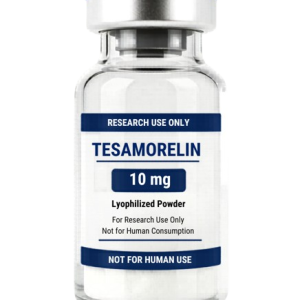
- Tesamorelin. A GHRH analog also used in hepatic lipid research.
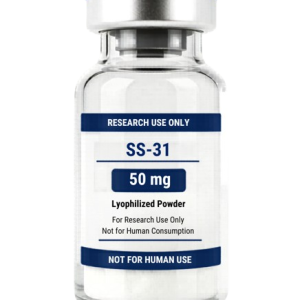
- SS-31. A mitochondria-targeted peptide for bioenergetics work.
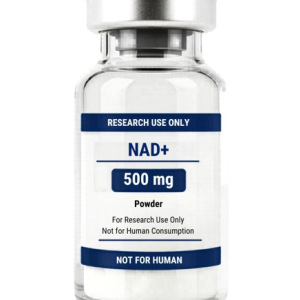
- NAD+ Buffered. A cofactor central to cellular metabolism research.
Browse the full catalog at the Torsena shop.
Reviews
There are no reviews yet.